
The World Through the Eyes of a Colorblind Person
29.10.2013
Eye exam

Almost every tenth man on Earth is colorblind, meaning a person who cannot distinguish certain colors. This visual peculiarity was named after John Dalton, who discovered his own color blindness only at the age of 26 (and at the same time found out that his “gray” jacket was actually burgundy).
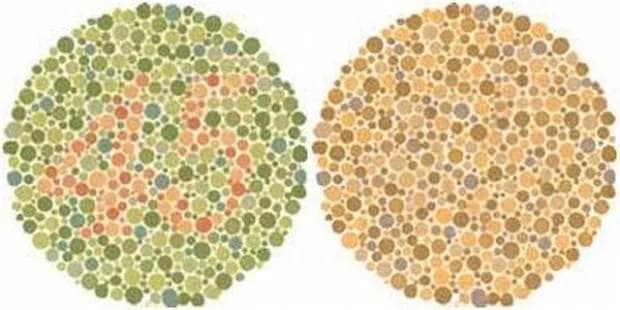
Colorblind people are divided into dichromats (who may fail to distinguish red — protanopia, green — deuteranopia, or blue — tritanopia) and monochromats (black-and-white vision). Only about 1% of all colorblind people are monochromats, which is approximately 1 in 2,325 individuals.

Blue is correctly perceived by the vast majority of people — that is why the interfaces of many software programs are predominantly designed in this color.

The highest percentage of colorblind people is recorded in the Czech Republic and Slovakia, whereas on the Fiji Islands and among Brazilian indigenous peoples, colorblindness is almost nonexistent.

Color blindness first attracted public attention in 1875, when a train crash near the town of Lagerlund in Sweden claimed many lives. It turned out that the train driver could not distinguish the red color, and the development of transport at that time led to the widespread use of color signaling.
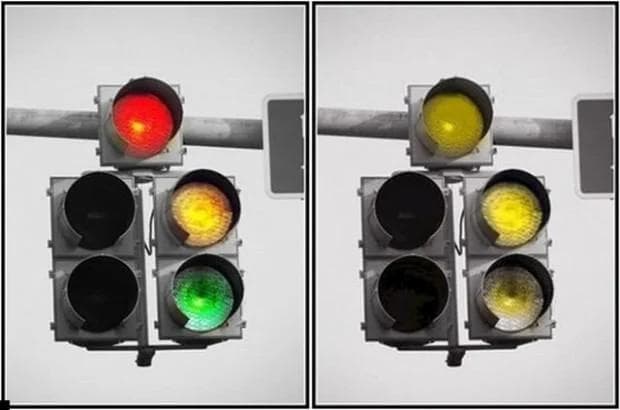
Hereditary color blindness affects about 8% of men and 0.5% of women (which means that on average there are around 43 colorblind people per 1,000 individuals).

Color blindness is transmitted mainly through the maternal line. Sometimes changes in color perception occur due to damage to the retina or the optic nerve. A person can also lose color vision after a traumatic brain injury, severe influenza, stroke, or heart attack.

Color blindness is not a disease. People with color blindness usually have normal visual acuity: they see objects well but perceive their colors somewhat differently. Most colorblind people are unaware of their condition.

Colorblind individuals are also found among famous painters: Vrubel, Repin, Van Gogh, Savrasov, Marion, Constable. A defect of color vision did not prevent them from creating remarkable paintings that reflect their unique perception of the colors of the surrounding world, different from the way most other people see it.
To know for sure what is happening with your eyes, book a full eye examination — the doctor will check all structures of the eye and explain the results.
Book an ophthalmologist consultation online
Pick a convenient time in the web account or the mobile app — no waiting for a call
Frequently Asked Questions
The article explains: color blindness, color perception disorders, types and everyday implications. It helps patients understand what to pay attention to and when an ophthalmologist consultation is needed.
No. The material is informational. Self-treatment may be unsafe because similar symptoms often have different causes.
Book an examination if symptoms recur, worsen, affect vision, or if you need a decision about surgery, laser treatment or medication therapy.
news
More news about eye examination
Eye exam
Cataract or Age-Related Farsightedness: How to Tell?
After the age of 40–45, vision can deteriorate for different reasons. A cataract is a clouding of the lens, while age-related farsightedness, or presbyopia, is a loss of the ability to focus up close. For some people reading glasses are enough, while others need treatment. You cannot determine the cause by how your eyes feel, but the typical differences will help you get examined in time.
09.08.2026
read moreEye exam
When Should People with Diabetes Have Their Eyes Checked?
Diabetes can damage blood vessels for a long time without causing obvious symptoms, and this includes the vessels of the eyes. That is why people with diabetes need regular check-ups with an ophthalmologist, even if they see well and feel no discomfort at all.
10.07.2026
read moreEye exam
Colour Blindness – How Colour-Blind People See and Which Colours They Can't Tell Apart
The ability to distinguish colours is an important part of how we perceive the world. Thanks to millions of light-sensitive cells in the retina, we can see a vast number of shades, find our way around and get extra information about the objects around us. However, some people perceive colours differently from the usual norm. This condition is called colour blindness.
18.06.2026
read more